The Accuracy Problem in Vulnerability Scanning

Software development icon

Incomplete Image Visibility

Most scanners inspect package metadata only and miss binaries, embedded tools, and custom artifacts inside images.

Software development icon

Low-Fidelity CVE Results

Reported vulnerabilities often lack applicability context, forcing teams to manually validate findings.

Software solution icon

Distro-Level CVE Noise

Distribution advisories inflate CVE counts even when affected packages are not present or reachable.

Precision Beyond Traditional Scanners

RapidFort Analyzer replaces surface-level scanning with deep, validated analysis you can act on with confidence.

Deep Image Analysis

Enumerates all files, packages, and configurations within container images, not just those reported by package managers.
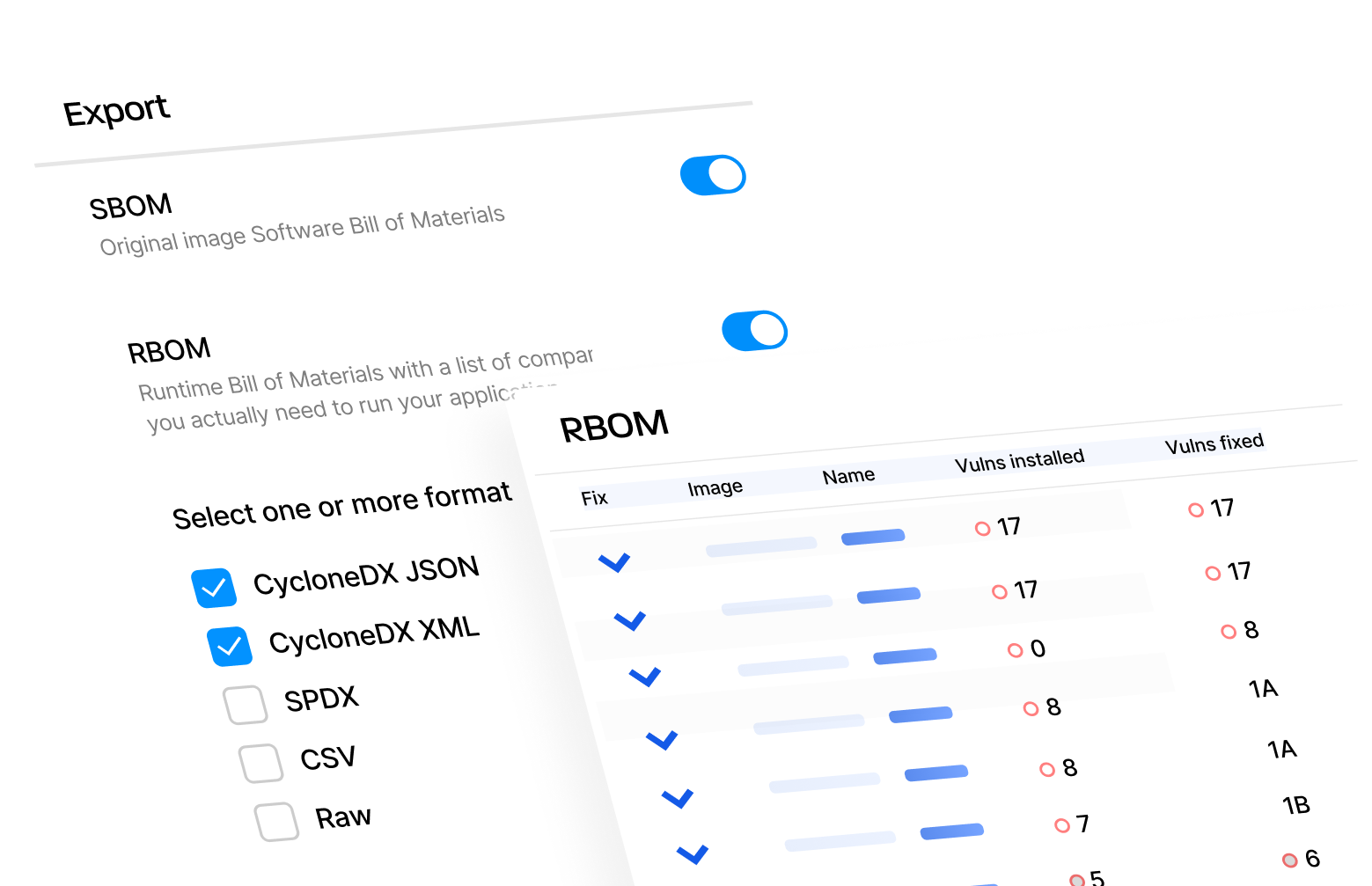
User interface showing export options for SBOM and RBOM with toggles enabled, and selection checkboxes for CycloneDX JSON and XML. A partially visible RBOM table lists fixes, images, names, vulnerabilities installed and fixed with numeric values.

Validated CVE Applicability

Confirms whether a vulnerability truly applies to the image by accounting for distribution specifics, package presence, and configuration context.
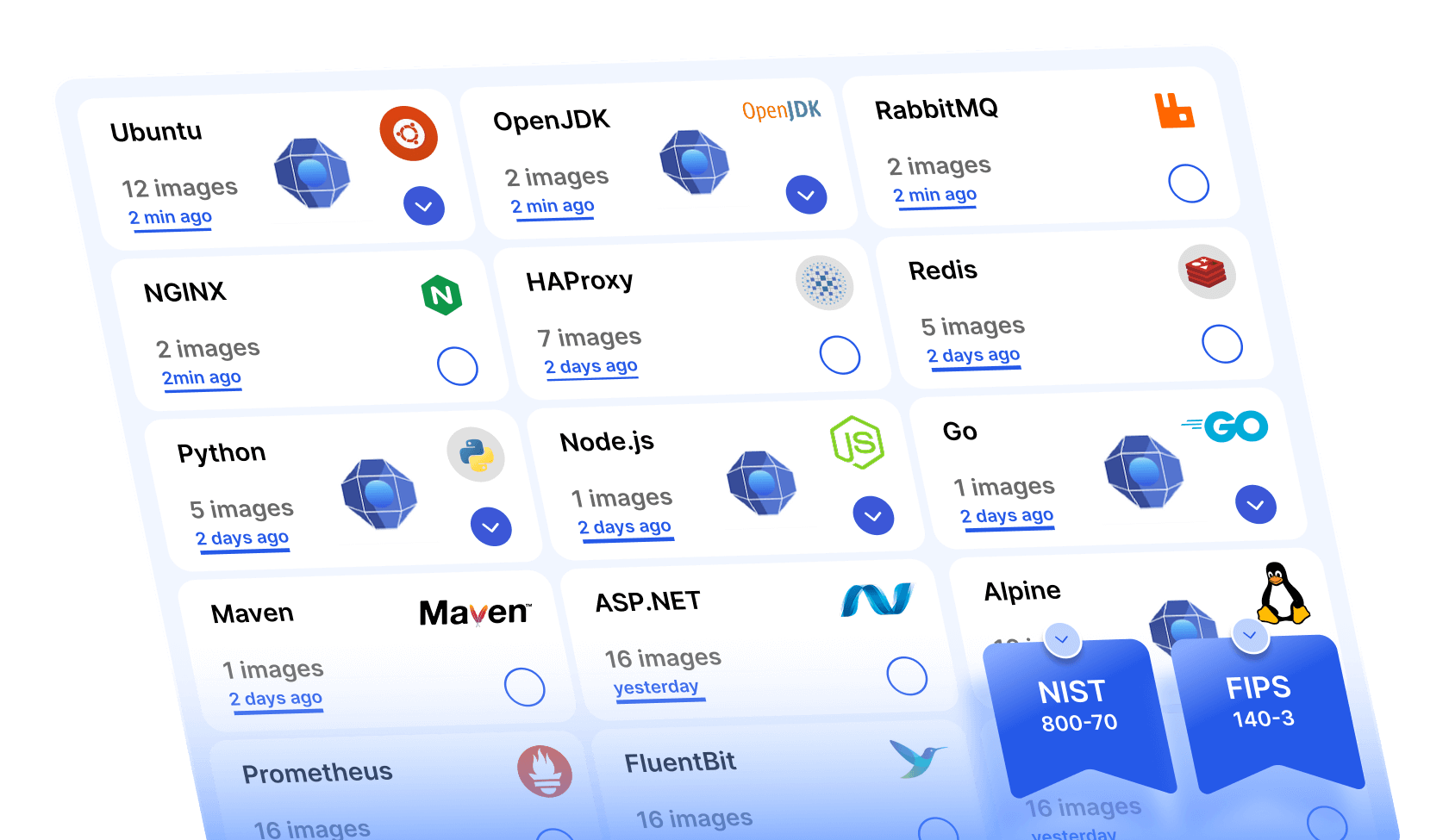
UI panel showing various software images with their logos, names, number of images, and last update times, including Ubuntu with 12 images updated 2 min ago, OpenJDK with 2 images 2 min ago, RabbitMQ with 2 images 2 min ago, NGINX with 2 images 2 min ago, HAProxy with 7 images 2 days ago, Redis with 5 images 2 days ago, Python with 5 images 2 days ago, Node.js with 1 image 2 days ago, Go with 1 image 2 days ago, Maven with 1 image 2 days ago, ASP.NET with 16 images updated yesterday, Alpine with 16 images, Prometheus and FluentBit with 16 images each, and security standards banners for NIST 800-70 and FIPS 140-3.

Exploit Aware Prioritization

Applies Rapid Risk score to enable teams to focus on vulnerabilities most likely to be exploited in the near term.
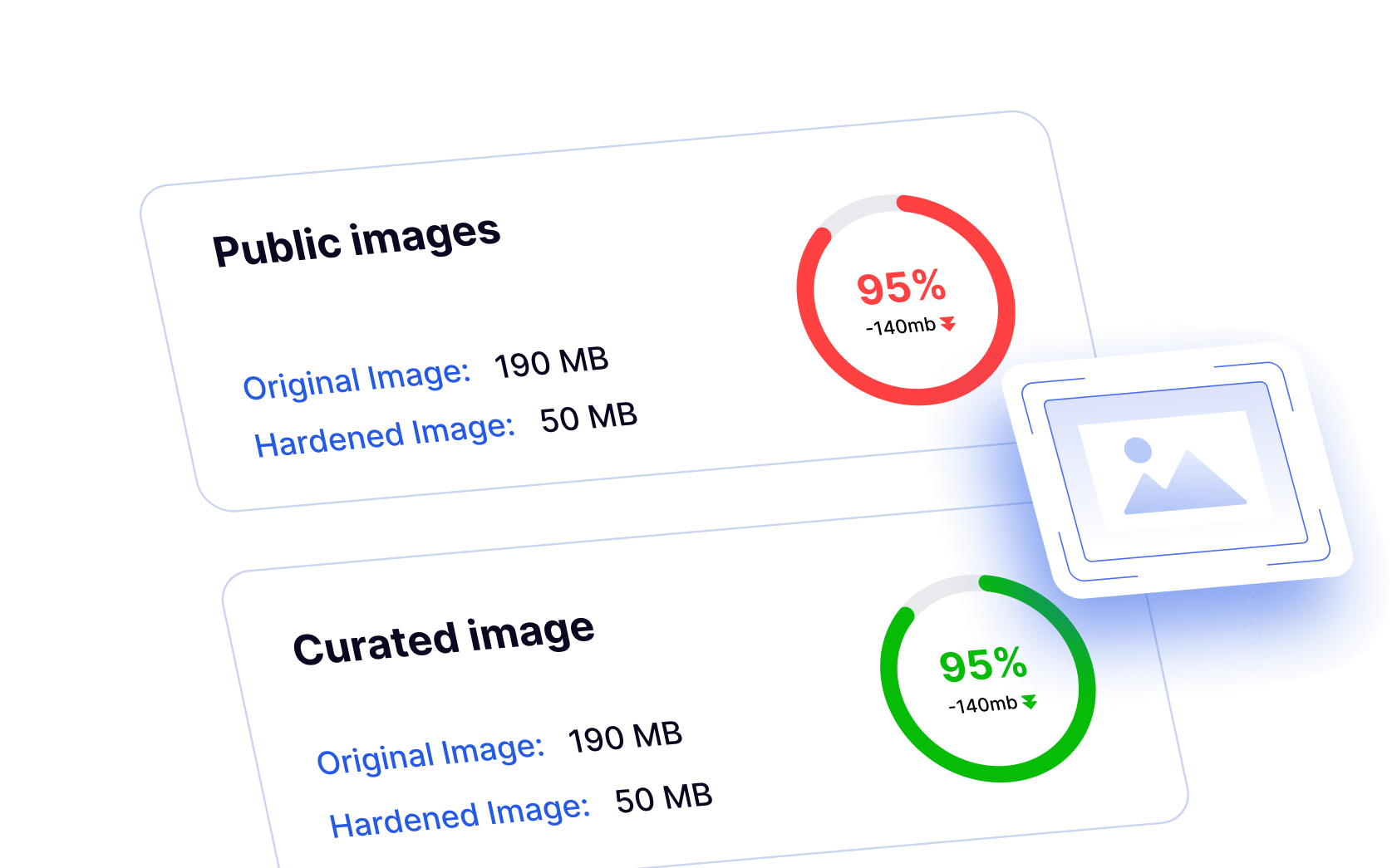
Comparison of data size reduction for public and curated images, both reduced from 190 MB original to 50 MB hardened images with 95% reduction; public image reduction shown with red circular chart and curated image with green circular chart.

Enterprise SBOM Generation

Export SBOMs in SPDX, CycloneDX, JSON, and CSV for audits, compliance, and customer security reviews.
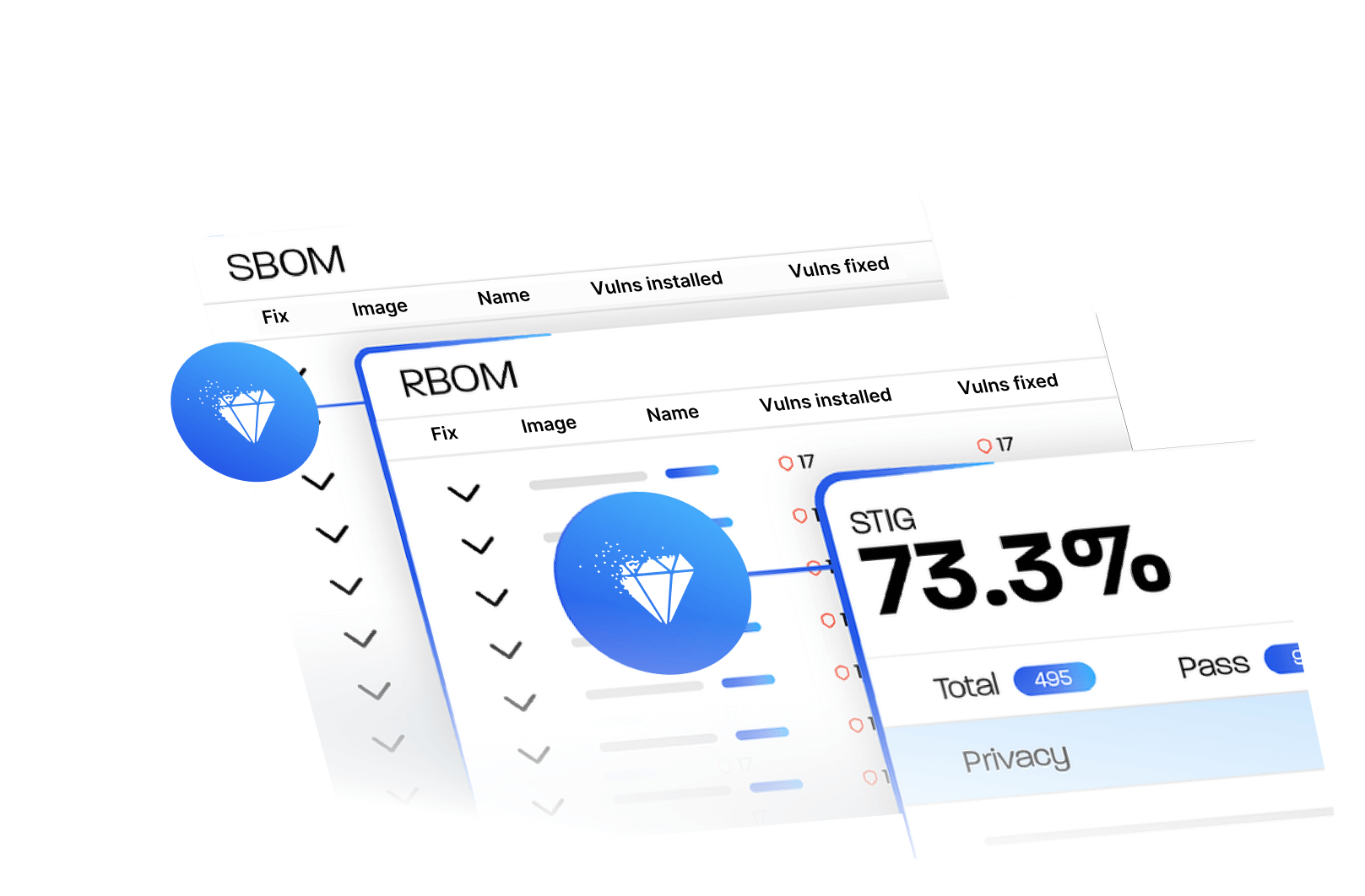

Screenshot of a software security dashboard showing SBOM and RBOM tables with columns for Fix, Image, Name, Vulns installed, and Vulns fixed, along with a STIG compliance score of 73.3%, total count of 495, and highlighted Privacy section.
Image swap graphic

Curated Images Swap Suggestion

RapidFort Analyzer identifies when vulnerabilities originate from base images and recommends secure, near-zero CVE Curated Images as drop-in replacements.

Tick Icon
Remove large volumes of inherited CVEs instantly
Tick Icon
Standardize on hardened STIG and CIS aligned, FIPS validated baselines
Tick Icon
Improve remediation speed and compliance readiness without code changes

Accuracy That Improves Security Outcomes

Deployment solution icon

~20% Less Noise

Fewer false positives compared to traditional vulnerability scanners.

Deployment solution icon

Complete Binary Visibility

Full discovery of files and binaries across container layers.
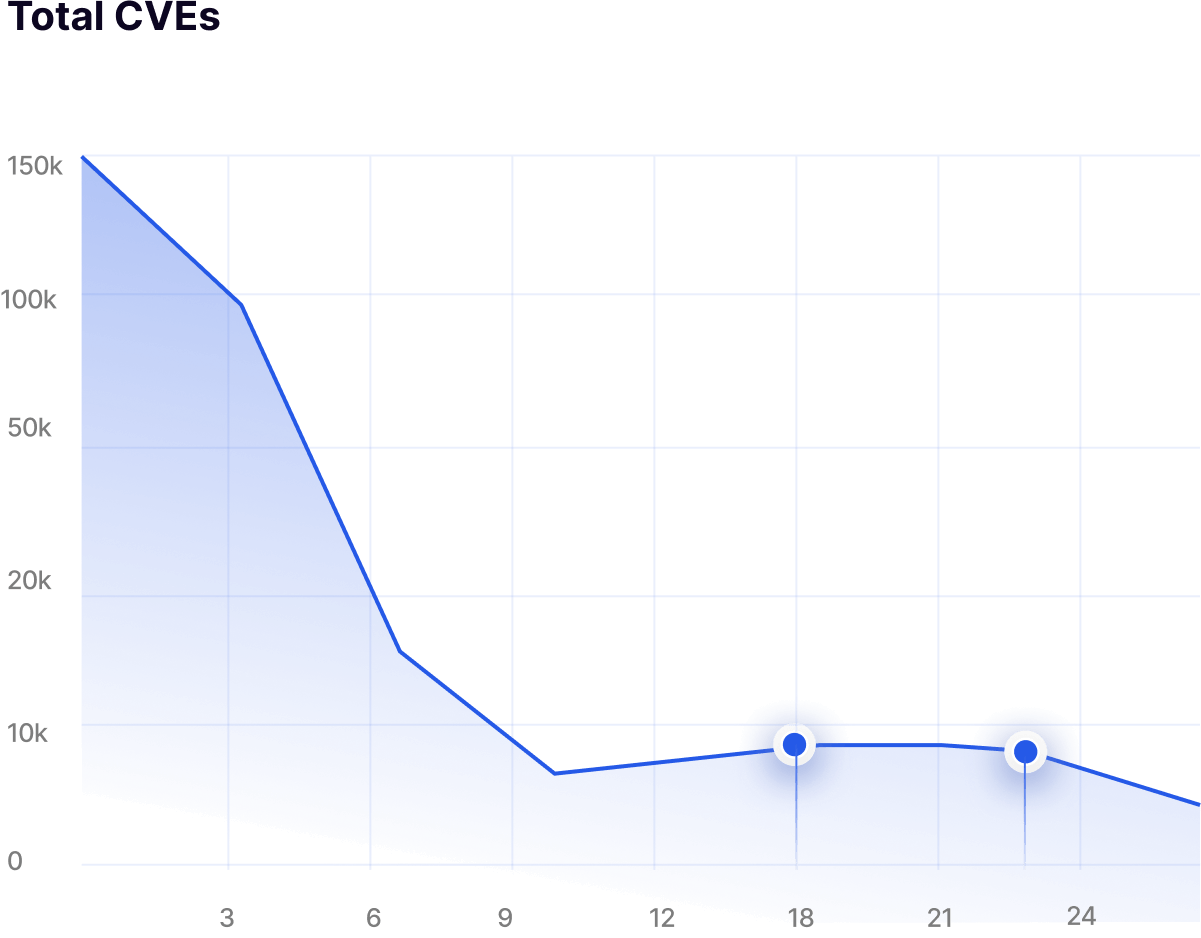
Area chart showing Total CVEs with values starting at about 150,000 at day 1, sharply decreasing to below 20,000 by day 6, then gradually fluctuating around 5,000 to 10,000 through days 12 to 24, with highlighted points at days 18 and 24.
Benefit icon

Faster Detection

Rapid identification of newly published CVEs across container environments.

Deployment solution icon

Lightweight Scanning

Optimized performance for fast CI/CD pipeline execution.

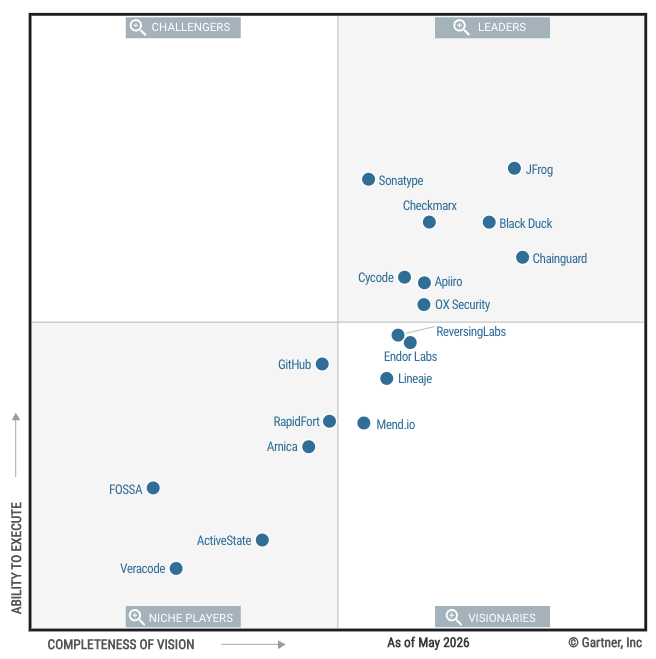
Ability to Execute

2026 Gartner® Magic Quadrant™

for Software Supply Chain Security

Get the Report