
Runtime Protection for Containerized Workloads


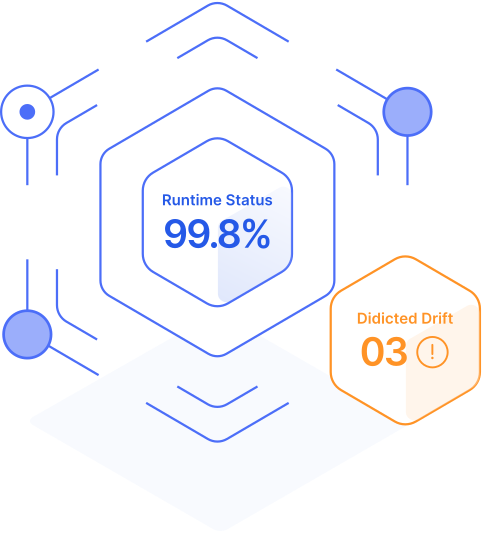

Most Container Risk Comes From Software That Never Runs

Images and scans
Images and scans show what is packaged, not what executes

Runtime behavior
Changes after deployment due to drift and configuration variance

Security teams
Security teams lack evidence that production matches approved builds
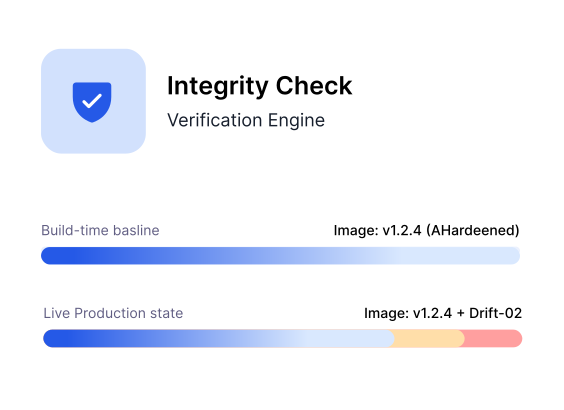
Build-Time Controls Cannot Prove Runtime Integrity
Evidence expectations
Approved images can diverge from what actually runs in clusters
Vulnerable components may remain active even after remediation at build time
Auditors and customers increasingly ask for runtime-verifiable evidence
Runtime Visibility and Evidence

RBOM artifacts tied to live workloads
Detection of drift from approved images and configurations
Clear confirmation of which components are actually active in production

Operational and Security Outcomes
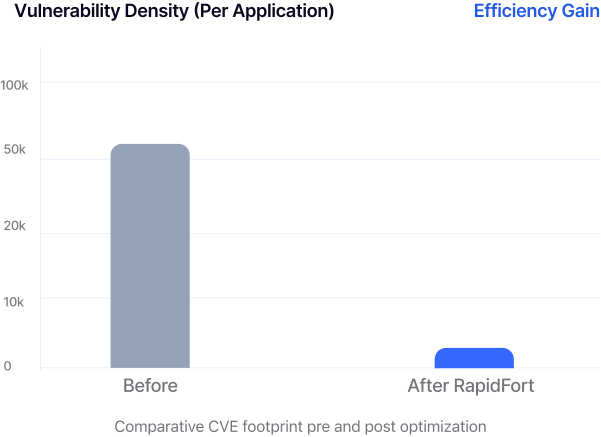

Reduction in CVE Noise
Maintain a near-zero CVE posture beyond build time

Kernel Agents Required
Reduce uncertainty during incidents and security reviews

Real-time Verification
Provide continuous, runtime-verified evidence for audits and compliance


