
In brief
- Compare on eight criteria: base distribution, migration effort, CVE patch windows (unit, clock start, KEV window, contractual or not), catalog coverage for your images, FIPS and STIG variants, scanner compatibility with SBOM and VEX, free tier terms, and pricing model with vendor stability.
- For Ubuntu, Debian and Red Hat teams that need a drop-in change, RapidFort Images keep the distribution and tags; for Alpine or Debian teams with no SLA or FIPS need, the Docker Hardened Images Community tier is free, including for production use.
- Whatever you choose, scan it with your own scanner and read the patch windows in the contract documents, not the landing page.
Teams look for Chainguard alternatives for three reasons that appear in buyer forums and reviews: moving to Chainguard OS means a one-time Dockerfile refactor for base images, pricing is per image or, for the full catalog, by engineering organization size, with the catalog starting at 19,000 US dollars for a team of 10, and the free tier is up to five images per organization, while the pricing FAQ says free images are not covered under the CVE remediation SLA (Chainguard pricing page and comparison FAQ, October 20, 2026). None of those is a reason to pick any particular alternative. This guide gives the eight criteria that decide the outcome and compares seven options, RapidFort included, against them; the comparison table sets five of them side by side with Chainguard. Each vendor fact is drawn from the vendor's own page.
Why teams look for a Chainguard alternative
The reasons are specific and documented. On migration, Chainguard's own comparison FAQ says its pre-built application images and Helm charts are designed as drop-in replacements for many common Bitnami deployments, while base images require a one-time Dockerfile refactor, and its migration guide maps Debian apt commands to apk, such as apt install to apk add. Reviewers put it more bluntly: "you have to modify your Dockerfiles to work with the Wolfi OS" and "Some image [sic] were missing which complicated the process of migrating all our services" (G2 reviews). On price, the pricing page lists the Containers Catalog as licensed by the size of the engineering organization, starting at 19,000 US dollars for a team of 10, as of October 2026; engineers on Hacker News reported per-image costs in August 2025. On the free tier, the same pricing page says free images "are not covered under our CVE remediation SLA", and Chainguard reduced its free tier on November 21, 2024.
None of this makes Chainguard a poor product. It makes the evaluation a question of fit, and fit is decided on the criteria below.
Eight criteria to compare before you choose
Base distribution and compatibility
Does the provider build on the distribution you already run, or on its own? Ubuntu and Debian ship the GNU C Library, glibc; Alpine is built around musl libc. A provider that keeps your distribution keeps your compatibility; one that moves you to a new operating system means a full rebuild and test pass for every service.
Migration effort: drop-in or Dockerfile rewrite
Ask whether the FROM line changes only its registry and image name, or whether tags, users, paths, environment variables and entrypoints change too. The accurate answer is per image type, as Chainguard's FAQ shows.
CVE patch windows: unit, clock start, KEV window, contractual or not
A "7 days" statement can mean seven calendar days from upstream patch availability, seven business days from CVE publication, or a target with no contract behind it. Ask for all four terms. The CISA Known Exploited Vulnerabilities catalog lists vulnerabilities with reliable evidence of active exploitation, so a separate KEV window matters.
Catalog coverage for your images, counted the same way
Providers count differently: some count open source projects, some count version tags, some count images. Compare on the list of images you actually run, not the headline number, and check whether older versions you still depend on are covered.
FIPS and STIG variants and the evidence behind them
For regulated workloads, ask whether FIPS variants exist for your images and whether the hardening is against a named CIS Benchmark or DISA STIG. FIPS 140-3 is the US federal standard for the security requirements of cryptographic modules.
Scanner compatibility, SBOM and VEX
Run the candidate image through your own scanner before you decide. In a 2024 study of 927 Docker images, Trivy and Grype disagreed on both the number of vulnerabilities and the vulnerability IDs across the 865 images found to have vulnerabilities (IEEE SCAM 2024). Ask for SBOMs in SPDX or CycloneDX and for VEX statements on remaining findings.
Free tier terms and production rights
Ask how many images are free, whether they may run in production, whether they carry an SLA, and whether pulls require a login. Free tiers have been cut before, by more than one provider.
Pricing model, price history and vendor stability
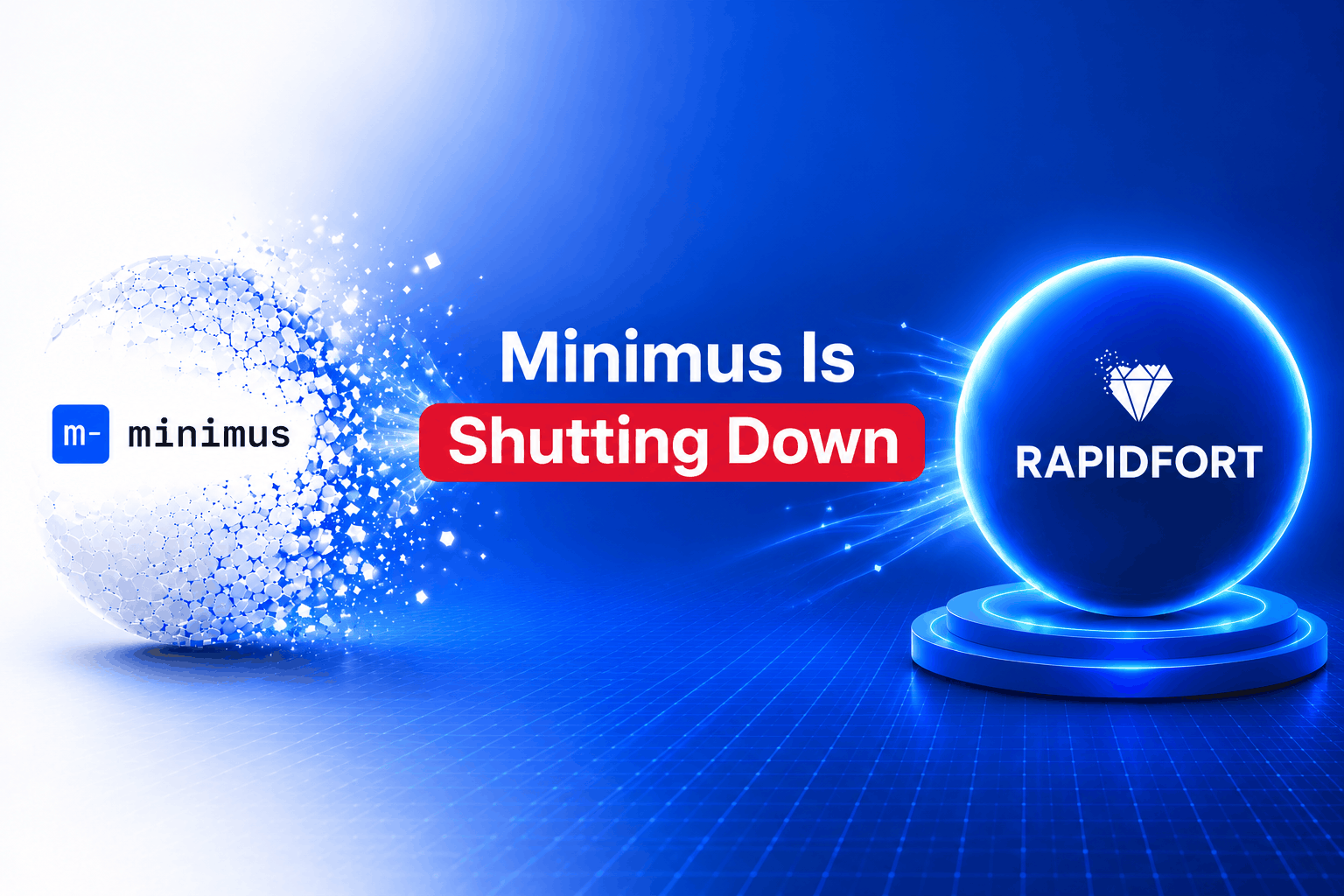
Per image, per repository, by team size or by catalog: each model scales differently with your service count. Vendor stability is now a real criterion: Minimus shut down in October 2026, and Echo acquired Minimus's key assets.
The alternatives
RapidFort Images
RapidFort Images are drop-in replacement container images built on all major LTS releases of Ubuntu, Debian and Red Hat, plus Alpine, including minor and older versions. They are pin-for-pin compatible with no re-baselining: the same distributions and tags, with environment variables and paths unchanged, so the migration is a change of registry and image name rather than an operating system move. RapidFort engineers manually patch and rebuild them, and every image is continuously patched to eliminate all CVEs for which a patch is available, with up to 99.9% CVE elimination across distroless and full images.
Patch windows: CISA KEV 1 day, Critical and High 7 days, Moderate 21 days, Low 28 days, from when a patch is available. Images are hardened against their appropriate STIG or CIS Benchmark, when available; FIPS and standard variants are available unless an image does not need one or upstream licensing prevents it. The images carry rich metadata, work with every major scanner, and are registry flexible; CycloneDX with VEX is included on the Full Catalog plan. The catalog holds tens of thousands of images. Plans are listed at rapidfort.com/pricing, including a free tier. Support is 24x7x365 by telephone and email.
Docker Hardened Images
Docker Hardened Images (DHI) are built on Alpine and Debian, licensed under Apache 2.0, and the Community tier is free, including for production use, with SBOMs, SLSA Build Level 3 provenance, OpenVEX and signatures. The Select tier starts at 5,000 US dollars per repository and adds critical CVE fixes within 7 days under an SLA, FIPS and STIG variants and limited customization; the Enterprise tier adds unlimited customization and eligibility for Extended Lifecycle Support of up to five more years after upstream end of life. Docker describes migration as changing one line in the Dockerfile (October 20, 2026). Users report that pulls require a Docker login. Hardened Images alternatives
Bitnami Secure Images
Bitnami Secure Images are built on Photon OS, support FIPS, STIG and FedRAMP, and are sold through Broadcom; developers can access a portion of the catalog free for non-production use. In August 2025 Broadcom began archiving the public Bitnami catalog to a Bitnami Legacy location.
Iron Bank
Iron Bank is the US Department of Defense secure container image repository within Platform One, providing hardened containers for DoD use at no charge. Its own FAQ states that "Iron Bank does not authorize or approve containers at this time" and that it provides an assessment teams use to obtain their own authorization. It is built for defense programs, and pulling images requires a Registry1 account.
Google Distroless
Distroless images contain only the application and its runtime dependencies, with no package manager or shell. They are an open source project in the GoogleContainerTools organization on GitHub rather than a commercial catalog. Its support policy tracks Debian's support timeline and publishes no CVE fix window or rebuild cadence. One practitioner on Hacker News reports that Google's distroless images "do not get updated frequently enough to handle security issues".
Echo (acquirer of Minimus assets)
Echo acquired key Minimus assets in August 2026, and the Minimus registry went offline in October 2026. Echo publishes target patch times of 7 business days for Critical and High CVEs and 10 business days for Medium and Low, with commercially reasonable efforts and no separate KEV window. Pricing is per artifact or by engineering organization size, by quote. RapidFort offers free migration support to Minimus customers.
Building your own
Building hardened images in house means tracking upstream advisories, backporting fixes, rebuilding, testing and distributing images for every base you run, continuously. The cost is engineering time rather than license fees, and the patch window is whatever your team can sustain. It fits teams with a small number of bases and the staff to maintain them.
Comparison table
As of October 20, 2026; each vendor cell is from the named vendor's own page unless marked otherwise.
| Criterion | RapidFort | Chainguard | Docker Hardened Images | Iron Bank | Google Distroless | Build your own |
|---|---|---|---|---|---|---|
| Base distributions | Ubuntu, Debian, Red Hat (LTS releases), Alpine | Chainguard OS (Wolfi) | Alpine, Debian | Varies by image | Debian 13 based, including a static image (README) | Your choice |
| Migration | Drop-in: same distribution and tags | Base images need a one-time Dockerfile refactor; app images and Helm charts drop-in for many Bitnami deployments (vendor FAQ) | One-line Dockerfile change (vendor page) | Varies | Dockerfile change to distroless base | None |
| Fix windows | CISA KEV 1 day, Critical and High 7 days, Moderate 21 days, Low 28 days, from when a patch is available. | Critical 7 days, other 14 (contractual, pricing page); KEV 1 day (compare page) | Critical within 7 days under an SLA on Select and Enterprise; Community follows upstream cadence for Docker-released patches | No SLA published (vendor FAQ) | None published (support policy) | Your own |
| FIPS and STIG | FIPS and standard variants; hardened to STIG or CIS when available | STIG-hardened and FIPS-validated images (vendor pricing page) | FIPS and STIG variants on paid tiers | Baseline security settings; Iron Bank does not STIG images; no approval granted (vendor FAQ) | Not stated (README) | Your own |
| Scanner compatibility, SBOM, VEX | Every major scanner; SBOM export through RapidFort Analyzer in SPDX and CycloneDX; VEX on Full Catalog | SBOMs, signatures (vendor page) | SBOM, OpenVEX, signatures on all tiers | SBOMs generated with Syft (vendor FAQ) | Cosign signatures; SBOM not stated (README) | Your own |
| Free tier | Free tier available | Up to 5 images (FAQ also describes ~50 :latest images); not covered by the CVE SLA | Full Community catalog free, including production use (vendor page); users report a login is required (Hacker News) | Free; account required (vendor FAQ) | Free | n/a |
| Pricing model | Plans at rapidfort.com/pricing | Per image, or full catalog by engineering org size from 19,000 USD for a team of 10 | Select from 5,000 USD per repository; Enterprise by quote | Free | Free | Engineering time |
| Catalog | Tens of thousands of images | 3,000+ projects (compare page; the pricing page also shows 1,800+) | 1,000+ images (vendor page) | Over 1,000 hardened vendor and open source containers (vendor FAQ) | 12 images on Debian 13 (README) | Your bases |
Matching the alternative to the situation
If you run Ubuntu, Debian or Red Hat and cannot change distribution, choose a provider that keeps it; that is where drop-in replacement is real. If your services are Alpine or Debian and you need no FIPS, STIG or SLA, the DHI Community tier is free, including for production use. If you are a defense program, Iron Bank provides an assessment you can use to obtain your own authorization. If you need contractual KEV and severity windows and FIPS variants, compare the windows and the clock starts side by side, in the contract documents. And whichever you choose, scan it with your own tools before you sign.
Frequently asked questions
The one that keeps your distribution, fits your patch-window and compliance requirements and survives your own scanner. For teams on Ubuntu, Debian or Red Hat that want a drop-in change, RapidFort Images keep the distribution and tags.
It depends on whether you need what the price buys: a contractual CVE SLA, a stated 1-day KEV SLA and FIPS variants, on Chainguard OS. If you can accept the operating system move and the pricing model, it is; if you cannot, the criteria above point to the alternatives.
To leave, you change the FROM line back to a distribution image or to another provider's image. Whether anything else changes depends on how far your Dockerfiles were adapted to Chainguard OS; a provider that keeps standard distributions and tags minimizes the rest.
RapidFort provides FIPS and standard variants of RapidFort Images unless an image does not need one or upstream licensing prevents it. Docker offers FIPS variants on its paid Select and Enterprise tiers. Verify any other vendor's FIPS claim on its own page.
RapidFort fixes CISA KEV vulnerabilities within 1 day of a patch being available. Chainguard states a 1-day KEV SLA. Docker's published SLA is for critical CVEs on paid tiers.
Read the terms; free-tier terms differ by vendor and should be checked. Docker states that its full Community catalog is available including for production use, and its SLA applies to the Select and Enterprise tiers (as of October 2026). Chainguard's free images are not covered by its CVE SLA (as of October 2026). RapidFort offers a free tier; check its terms.
Pull the vendor image and the upstream image it replaces, scan both with your scanner, compare counts by severity, read the SBOM and VEX statements, and check the patch windows in the contract rather than on the landing page. What is a near-zero CVE image?
Latest posts



Eliminate Attack Vectors at the Source
Continuously eliminate up to 99.9% of CVEs without code changes


Products
Use Case
Quicklinks
Address
440 North Wolfe Road, Sunnyvale, CA 94085


Stay in touch
Subscribe for product updates and RapidFort newsletter.
© 2026 RapidFort, Inc.
RapidFort, RAPIDFORT, and RBOM® are registered trademarks of RapidFort, Inc. All other marks and names mentioned herein may be trademarks of their respective companies.