Software Attack Surface Management

Shrink Your Software Attack Surface Without Changing Your Code

RapidFort removes unused software from container images using runtime insight and automated hardening, reducing exposure while preserving application behavior.

Up to 90% attack surface reduction
Runtime-aware optimization
No code or pipeline changes

Most Containers Ship Far More Than They Ever Use

Three problem statements:

Dormant Packages & Tools

Images include OS packages, libraries, and tools that never execute

Bloated Base Layers

Shared base layers replicate the same risk across services

Silent Attack Growth

Attack surface grows even when application logic stays small

Unused Software Still Expands Your Attack Surface

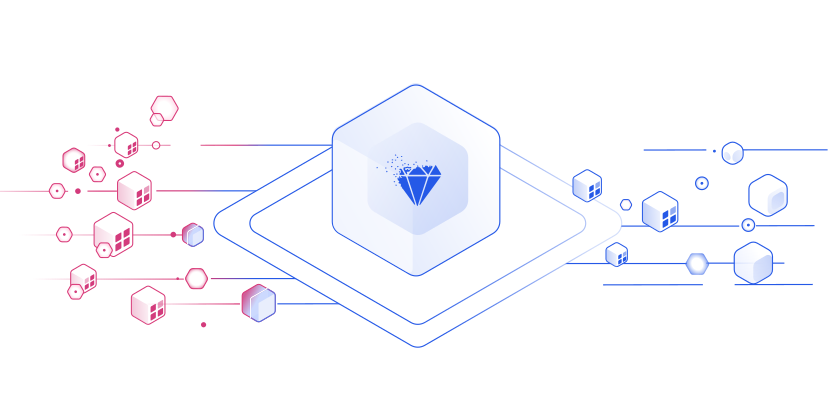
If a component exists inside the image, it can be scanned, abused, or exploited. Removing risk requires changing what ships, not just what is scanned.
Vulnerabilities in dormant components remain exploitable
Shared layers multiply exposure across environments
Patching unused code does not reduce structural risk

Hardened Continuously and Verified Transparently

Runtime Insight

Identify which files, libraries, and binaries actually execute using RBOM visibility.

Secure Foundations

Start from Curated Near-Zero CVE Images that eliminate inherited OS-level risk.

Automated Optimization

Remove unused components safely while maintaining application behavior.

Smaller Images. Less Exposure. Lower Risk.

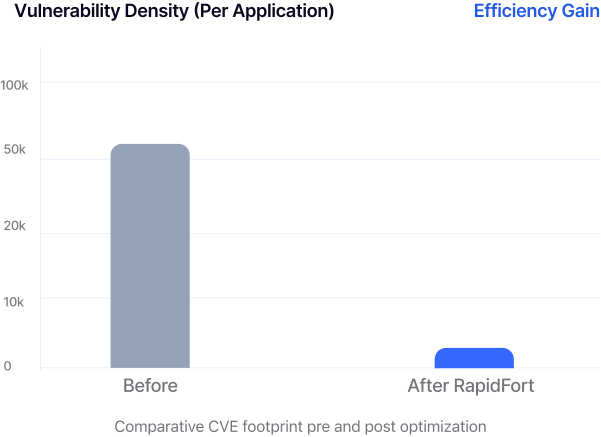
↓ up to 95% CVE reduction

reduction in CVEs tied to unused components

Faster audit preparation

Smaller images with faster startup and lower resource usage

↓ up to 90% attack-surface

Up to 90% reduction in software attack surface

↓ ~60% Less manual work

Less manual remediation effort across teams

Drastic Risk Reduction

Achieved on average within 48 hours of deploymen

Schedule a Demo
button-dark-icon

Stop Shipping Software You Do Not Need

Use runtime-aware optimization to ensure only the code your application actually uses ends up in production.

Your Containers Run on a Fraction of What You Ship

Security reviews typically focus on the code developers write, but most exposure comes from what ships around it. A large part of every container image is never exercised at runtime - yet it still introduces risk.

Excess Code in Every Image

OS packages, utilities, and tooling remain in production images by default
Frameworks and build-time tools stay even when they’re not needed at runtime

Inherited Risk from Base Images

Public and vendor images carry large CVE backlogs into every service
Shared base layers spread the same vulnerabilities across clusters and environments

Complexity That Scales Faster Than Teams

Each new microservice copies the same unnecessary layers and dependencies
Attack surface grows release after release, even when application logic stays small

Dormant Code Still Expands Your Software Attack Surface

Even if a component is never called by your application, it still exists inside the image. It can be scanned, exploited, and abused like any other part of your stack. Traditional approaches that focus only on scanning and patching do not change the underlying structure of the container.

Key Risk Points

Vulnerabilities in unused libraries and binaries can still be used for lateral movement or privilege escalation
A single vulnerable shared layer can affect dozens of services downstream
Containers inherit CVEs from upstream images, multiplying exposure across environments

 Attack Surface Reduction Powered by Runtime Truth

RapidFort combines runtime profiling, curated Near-Zero CVE Images, and automated optimization to strip away unused code paths while preserving application behavior.

Profile What Actually Executes

Analyze running workloads to see which files, libraries, and binaries are truly loaded
Generate a Runtime Bill of Materials (RBOM™) to separate active components from dormant ones
Use execution-path awareness to focus only on vulnerabilities in code that actually runs

Start from Hardened Curated Images

Build on Near-Zero CVE base images hardened with STIG/CIS benchmarks and aligned with NIST SP 800-70 guidance
Use embedded FIPS-validated cryptographic modules where required for regulated workloads
Remove a large portion of inherited OS-level vulnerabilities before the application is deployed

Optimize and Harden Containers Automatically

Remove unused libraries, binaries, and OS components based on runtime insight, not guesswork
Reduce image size and complexity while keeping application behavior intact
Achieve substantial reductions in both vulnerability count and software attack surface without refactoring code

Smaller Images, Fewer Vulnerabilities, Less Exposure

By combining curated foundations, runtime visibility, and automated hardening, RapidFort delivers attack surface reduction that is both visible to security teams and felt by engineering.

upto90%

Reduction in software attack surface across containerized workloads

upto95%

Reduction in CVE backlog tied to unused and inherited components

Smaller Images

that start faster and consume fewer compute and storage resources

Less manual remediation effort

for platform, security, and engineering teams

Built for Teams That Need Both Speed and Assurance

Attack surface reduction is most effective when it’s built into the software delivery process - not added as another manual step. RapidFort integrates with existing pipelines and environments so each team sees value in their own terms.

Platform & DevOps Teams

Integrate automated hardening into CI/CD and image pipelines
Ship smaller, safer containers across multi-cloud and on-prem clusters
Reduce operational risk without changing developer workflows

Security & Compliance Teams

Gain runtime-aware visibility via RBOM™ and curated baselines
Align hardening with frameworks such as FedRAMP, CMMC, SOC 2, and ISO 27001
Show clear before/after reductions in attack surface and CVEs

Engineering & Product Leaders

Decrease vulnerability exposure without slowing delivery
Reduce time spent on patching and rebuild cycles
Strengthen customer and stakeholder confidence in the software supply chain