
Near-zero CVE GitLab images, open-source flexibility, and audit-ready evidence help regulated organizations strengthen security without changing how their teams build and ship.
Your software supply chain depends on the infrastructure that builds, tests, and delivers your applications. That infrastructure needs the same security attention as the software moving through it.
For organizations running GitLab Self-Managed, this includes the container images used to deploy GitLab itself. Vulnerable packages, unnecessary components, and configuration gaps in those images can introduce exposure into a platform central to software delivery.
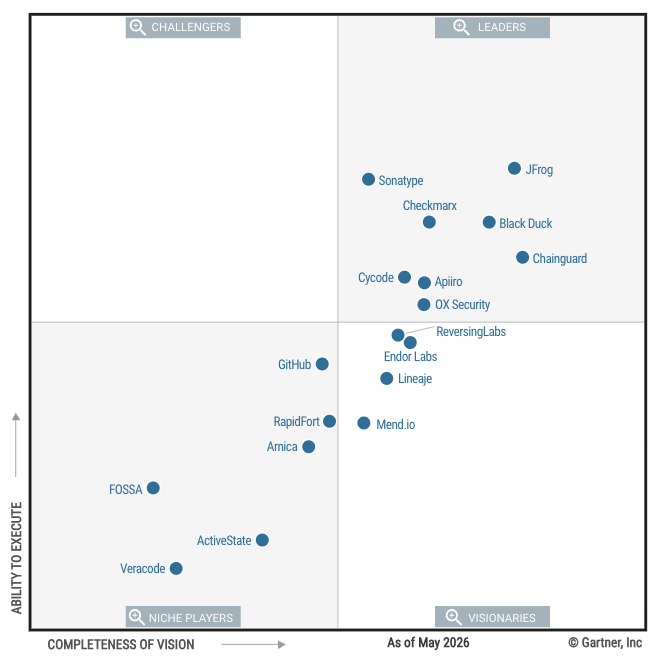
The RapidFort strategic partnership with GitLab addresses this foundation. Together, we are delivering hardened container images for regulated GitLab Self-Managed deployments, helping organizations reduce vulnerabilities, simplify security preparation, and maintain the flexibility of genuinely open-source software.
The goal is practical: make hardened GitLab deployments easier to adopt and sustain within the environments customers already operate.
Harden GitLab without rebuilding your environment
Security improvements are easier to put into practice when they fit existing operations.
RapidFort curated GitLab images retain GitLab’s existing functionality, version tags, and configuration surface. Teams can adopt hardened images without changing application code or migrating to a proprietary operating system.
That flexibility matters for organizations with established Linux standards, operational tooling, and deployment requirements. A security initiative should support those investments while giving teams a stronger foundation.
The GitLab offering is backed by the RapidFort Image Catalog, which spans every major Linux distribution. This broader approach gives organizations a path to standardize on hardened open-source images across their software environments while preserving distribution choice.
Start with patched images, then reduce the attack surface
RapidFort replaces vulnerable images with minimal, continuously patched alternatives. This reduces exposure at the source and the remediation work passed downstream to security and engineering teams.
Curated GitLab images are updated daily as upstream fixes become available. Published remediation SLAs are seven calendar days for Critical and High severity CVEs, 21 days for Medium severity CVEs, and 28 days for Low severity CVEs, measured from the availability of an upstream patch.
Patching is one layer of protection. Deploying minimal images provides another.
Minimal image variants remove unused packages, shells, and debugging utilities, reducing image size and the components available to an attacker. Organizations can select the appropriate variant for their operational requirements, combining a near-zero CVE posture with a smaller attack surface.
This combination is central to the RapidFort model with minimal, trusted, patched software.
Establish a golden image pipeline for GitLab
For regulated organizations, consistency is as important as the security of any individual image.
The partnership supports a golden image pipeline: a centrally governed, hardened source of GitLab images that moves through the customer’s build, security scanning, and deployment stages.
This gives platform and security teams a common foundation for managing image selection, patching expectations, and supporting evidence. It also helps reduce the repeated effort of preparing and assessing.
Onward and Upward!
Latest posts




Eliminate Attack Vectors at the Source
Continuously eliminate up to 99.9% of CVEs without code changes


Products
Use Case
Quicklinks
Stay in touch
Subscribe for product updates and RapidFort newsletter.
Address
440 North Wolfe Road, Sunnyvale, CA 94085


© 2026 RapidFort, Inc.
RapidFort, RAPIDFORT, and RBOM® are registered trademarks of RapidFort, Inc. All other marks and names mentioned herein may be trademarks of their respective companies.