
NIS2 container security requirements: a compliance mapping guide

After reading this guide
Key Takeaways
- NIS2 (Directive (EU) 2022/2555) applies to medium and large entities in sectors such as energy, health, banking, public administration, and digital infrastructure, plus some entity types regardless of size.
- The directive never names containers, but its Article 21 risk-management measures and Article 23 reporting duties cover the pipelines, registries, and clusters that run in-scope services.
- Container controls that satisfy those duties: SBOM generation, image vulnerability scanning, configuration and admission control, runtime monitoring, and a documented incident-response process.
- Article 23 sets a 24-hour early warning, a 72-hour incident notification, and a final report within one month.
- Continuous SBOM generation, scanning, runtime profiling, and benchmark checks keep audit evidence current between audits. Schedule a demo
Under NIS2, you have 24 hours from becoming aware of a significant incident to send an early warning to your national CSIRT, and essential entities face hefty fines for infringing the directive's security or reporting duties. If you ship containerized software into EU essential or important sectors, NIS2 container security requirements reach your build pipeline, registry, and clusters. This article maps each relevant NIS2 duty to a container control you can operate and the evidence that control produces. It covers Article 21 risk-management measures, Article 23 incident reporting, supply-chain security, and how SBOMs, runtime profiling, and benchmark checks keep that evidence current.
What is the NIS2 Directive and why does it affect container workloads?
The NIS2 Directive (Directive (EU) 2022/2555) replaced the 2016 NIS Directive. It widens the set of entities that must meet a cybersecurity baseline, covering medium and large organizations in energy, health, banking, transport, public administration, digital infrastructure, and other sectors the directive classifies as essential or important. It also tightens enforcement: under Article 20, management bodies must approve the cybersecurity risk-management measures and can be held liable for infringements.
Much of the software in those sectors is built, shipped, and run as container images. For example:
- A hospital platform team deploys patient services as Kubernetes workloads.
- A bank packages trading and reporting services into container images.
- A public-sector agency runs citizen-facing apps on managed Kubernetes.
- A cloud or DNS provider operates containerized control planes.
In each case, the container pipeline (source, build, registry, and cluster) is part of the network and information system NIS2 protects. If a vulnerable or tampered image causes a significant incident, that incident falls under NIS2's risk-management and reporting duties. NIS2 also reaches some providers established outside the EU: certain digital infrastructure and digital service providers that offer services in the EU must designate a representative in a member state.
Which NIS2 security requirements apply to containers?
Article 21(2) lists the minimum risk-management measures every in-scope entity must take. These map most directly onto container security:
- Risk analysis and information-system security. Identify where containers introduce risk, such as vulnerable base images, over-permissioned pods, and exposed registries, and mitigate it.
- Supply-chain security. Control the risk that comes from suppliers and dependencies. Every base layer, package, and third-party dependency in an image is an inherited exposure.
- Incident handling. Document how you detect, triage, and respond to container incidents, and how you report them on the Article 23 timeline.
- Business continuity and crisis management. Back up, restore, and recover containerized services.
- Security in development and maintenance, including vulnerability handling. Build and configure container platforms to a secure baseline, such as CIS Benchmarks and Kubernetes Pod Security Standards.
- Human resources security, access control, and asset management. Control who can push images and deploy to the cluster, and keep an accurate inventory of what runs.
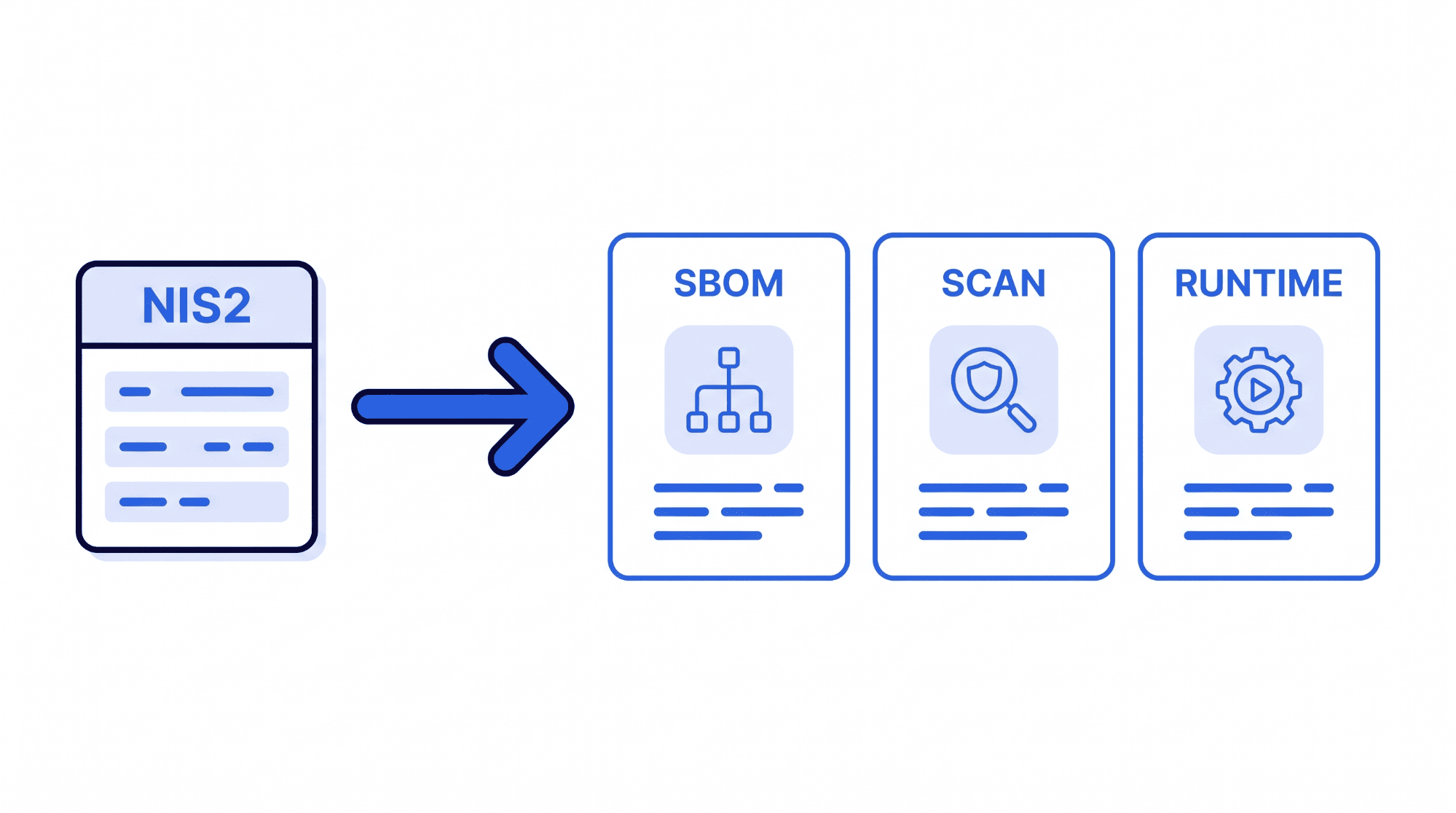
Article 21 describes outcomes and names no tools. Compliance work means mapping each outcome to a control you can operate and prove.
How do you map NIS2 requirements to container security controls?
Map each NIS2 duty to one or more container controls and the evidence each control produces:
| NIS2 duty | Container control | Evidence you can produce |
|---|---|---|
| Supply-chain risk | SBOM for every image; scanning at build time and in the registry | SBOM files, scan reports |
| Vulnerability management | CI/CD gating and continuous registry scanning | Pass/fail build logs, findings triage records |
| Secure configuration | Pod Security Standards, admission control, CIS Benchmark configuration | Benchmark reports, policy denials |
| Runtime protection | Runtime profiling and monitoring of running workloads | RBOM®, runtime alerts |
| Incident handling | Detection, response runbook, reporting template | Incident records with timestamps |
| Asset management | Inventory of images, clusters, and deployments | Live inventory, RBOM® |
Write this mapping into your security policy. Auditors and regulators check two things: that each duty appears in your program, and that a working control backs it.
What are the NIS2 incident reporting obligations for container teams?
Article 23 sets the reporting deadlines in the directive itself, and each one runs from the moment you become aware of a significant incident:
- An early warning within 24 hours.
- An incident notification within 72 hours, with an initial assessment of severity, impact, and indicators of compromise where available.
- A final report no later than one month after the incident notification, or a progress report at that point if the incident is still ongoing.
For container teams, that timeline creates two requirements. You need detection fast enough to know an incident occurred, whether it's a compromised image, a cryptomining pod, or a registry breach. You also need a forensic trail: which image, which version, which SBOM, which cluster, and what you changed.
An SBOM for every image plus a runtime inventory answers the first question every incident raises, "Are we affected, and where?", with one query across your image fleet.
How does NIS2 treat the software supply chain for containers?
Article 21(2)(d) names supply-chain security as a required measure, and Article 21(3) asks you to account for each direct supplier's vulnerabilities and the quality of its secure development practices. A container image packages an entire supply chain into one artifact. Meeting that duty for containers means:
- Knowing every component in every image (an SBOM).
- Validating the provenance and integrity of images with signing and verification.
- Choosing minimal, maintained base images with a small package footprint.
- Scanning third-party and base images continuously after onboarding.
- Tracking each vulnerability to a fixed version so remediation is actionable.
RapidFort Analyzer produces an enterprise SBOM and adds validated CVE applicability, which cuts false positives by roughly 20–25% compared with traditional scanners. Your supply-chain inventory then lists the vulnerabilities that apply to your images, which is the risk picture Article 21(3) asks you to assess.
How can you continuously prove NIS2 compliance for containers?
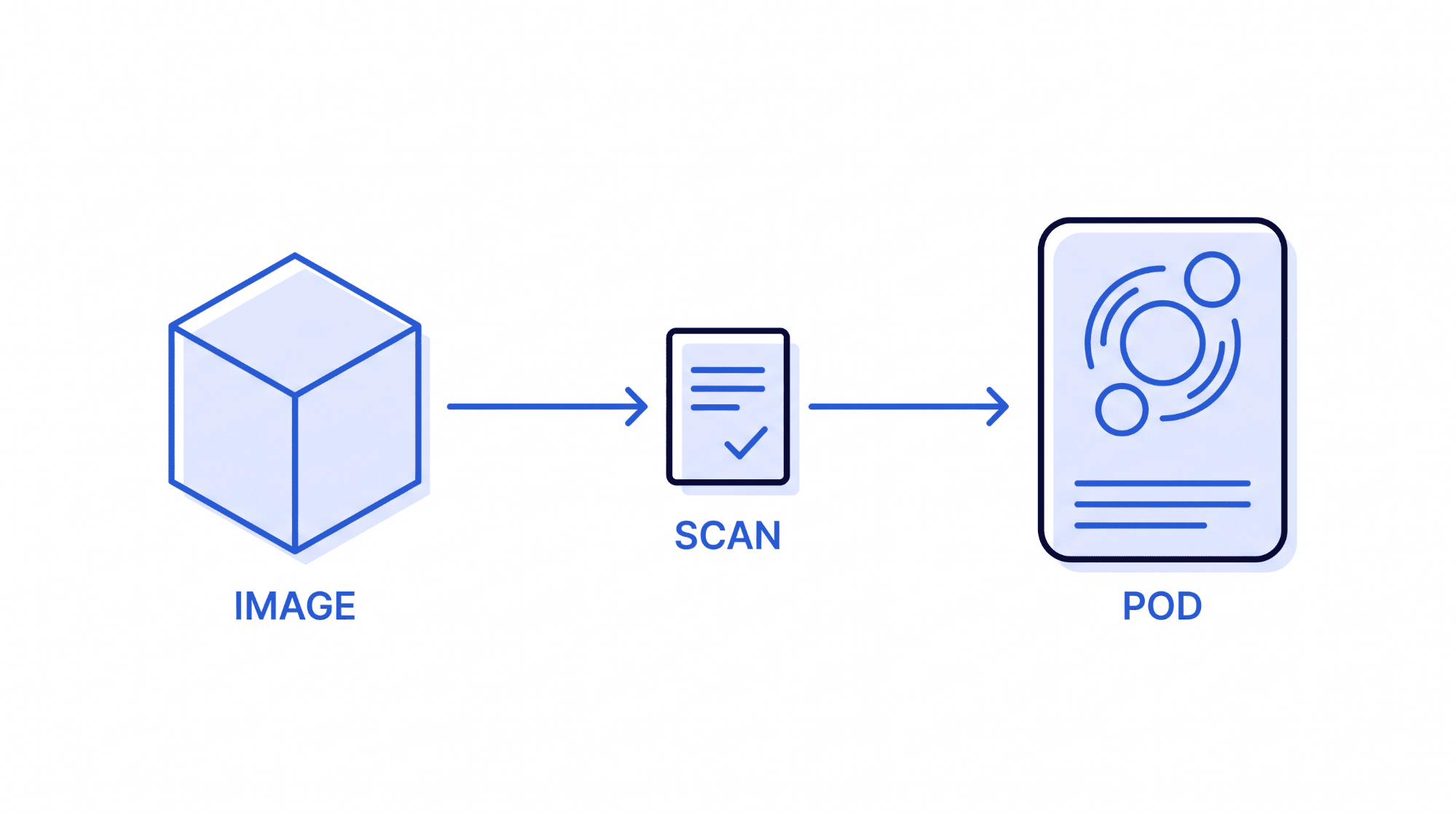
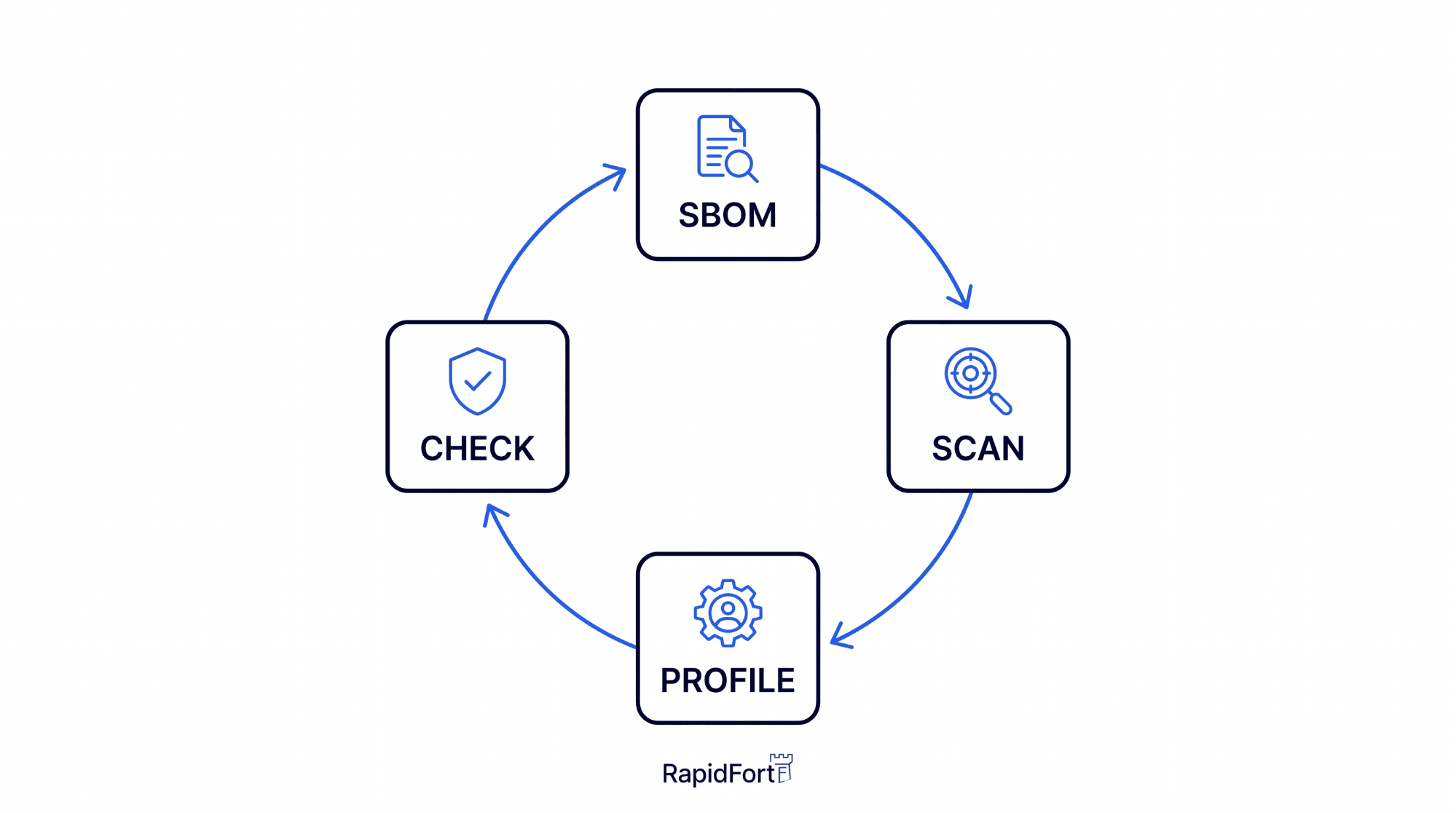
A point-in-time audit shows your posture on one day, and new CVEs publish every day after it. NIS2 asks for an ongoing "high common level of cybersecurity," so build continuous evidence collection into the pipeline:
- Generate an SBOM for every build. Make SBOM generation a pipeline gate so no image ships without one.
- Scan in CI/CD, in the registry, and against running workloads. Re-scan on a schedule, because an image that passed last month can carry a CVE published this week.
- Profile runtime behavior. An image can pass build-time checks and still carry packages that never execute. Runtime profiling shows what runs, so you can deprioritize unreachable packages and prove which vulnerabilities are reachable.
- Check configurations against benchmarks. OpenSCAP-based checks against CIS Benchmarks, DISA STIGs, and NIST frameworks produce audit-ready evidence in JSON, CSV, HTML, and XML.
- Keep the trail. Store reports with image version, timestamp, and owner so you answer any NIS2 request by querying stored records.
RapidFort CART (Container Assessment and Remediation Tool) runs these OpenSCAP benchmark checks continuously, detects configuration drift, and generates remediation scripts plus audit-ready evidence. RapidFort Profiler generates a Runtime Bill of Materials (RBOM®) that shows what executes in production, with under 1% overhead, so your runtime inventory stays current.
What tools and practices satisfy NIS2 container requirements?
NIS2 compliance for containers comes from a small set of controls that run consistently:
- SBOM generation and scanning. Generate an inventory for every image and scan it in CI/CD and the registry.
- Runtime profiling. Observe what executes in production to separate reachable risk from packages that never run.
- Curated base images. Start from near-zero CVE base images. RapidFort maintains tens of thousands of Curated Images on Alpine, Debian, UBI, and Ubuntu LTS, rebuilt every 24 hours and including STIG and FIPS variants, which eliminates inherited CVEs before the first scan.
- Automated optimizing. RapidFort Optimizer uses runtime data to remove components that never execute, eliminating up to 99.9% of exploitable CVEs and shrinking the attack surface by up to 90%.
- Benchmark validation. Run continuous CIS, STIG, and NIST checks with exportable evidence.
Curated images and optimizing shrink the vulnerability backlog your team has to remediate, and profiling plus benchmark validation produce the evidence NIS2 asks for. Together they replace a quarterly evidence-gathering effort with controls that run every day.
NIS2 container security FAQ
No. NIS2 sets outcomes, such as risk management, supply-chain security, and incident handling, that apply to the systems you operate. Because much regulated software is built and run in containers, those duties cover container pipelines, registries, and clusters.
No. NIS2 governs entities and their cybersecurity posture, while the CRA governs products with digital elements, including security duties for software makers. They overlap on supply-chain and vulnerability handling, so many teams build both programs on the same SBOM and scanning foundation.
Article 23 requires an early warning within 24 hours and an incident notification within 72 hours of becoming aware of a significant incident, followed by a final report within one month of the notification. Member states transpose the directive into national law, so confirm the reporting procedure with your national CSIRT. Fast detection and a current SBOM and RBOM® inventory let you meet the 24-hour deadline.
NIS2 targets medium and large entities in defined sectors, plus some entity types regardless of size, such as DNS service providers and top-level domain name registries. If you supply software to an essential or important entity, its supply-chain duty under Article 21 can push NIS2-aligned requirements to you through contract terms.
Produce the evidence your controls already generate: SBOMs for every image, scan reports from CI/CD and the registry, runtime inventories (RBOM®), and benchmark validation output (CIS, STIG, and NIST) in a portable format. Continuous tooling generates these artifacts on demand, so an audit request doesn't trigger a manual export.
Key takeaways
- NIS2 never names containers, but its supply-chain, risk-management, and incident duties cover container pipelines, registries, and clusters.
- Map each NIS2 duty to a container control that produces evidence, and write the mapping into policy.
- The 24-hour early warning rewards fast detection and an SBOM and RBOM® inventory you can query.
- Continuous SBOM generation, scanning, runtime profiling, and benchmark validation keep audit evidence current.
- Starting from near-zero CVE images and removing unused components shrinks both the vulnerability backlog and the compliance workload.
RapidFort Continuous Compliance generates SBOMs, RBOM® inventories, and benchmark evidence for the images you run, so your NIS2 evidence can stay current between audits .
To learn more about how we can help you meet your NIS2 Container Security Requirements
Schedule a demo


